|
Hi Smiley-- glad to help with the tubing.
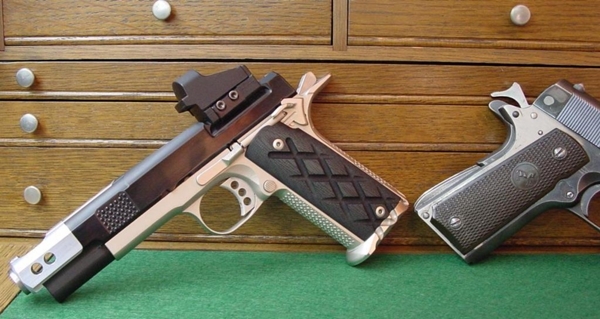
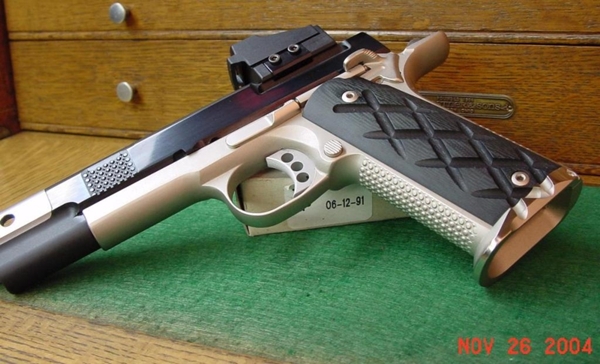
Well, this gun is not exactly "me" either, I mean, it's my first-ever dot-sighted, compensated, centerfire handgun..... I never really got big into game guns personally and don't get a lot of requests for that kind of work.
But I had been sorta hankering for something like this and have I had fun with it!
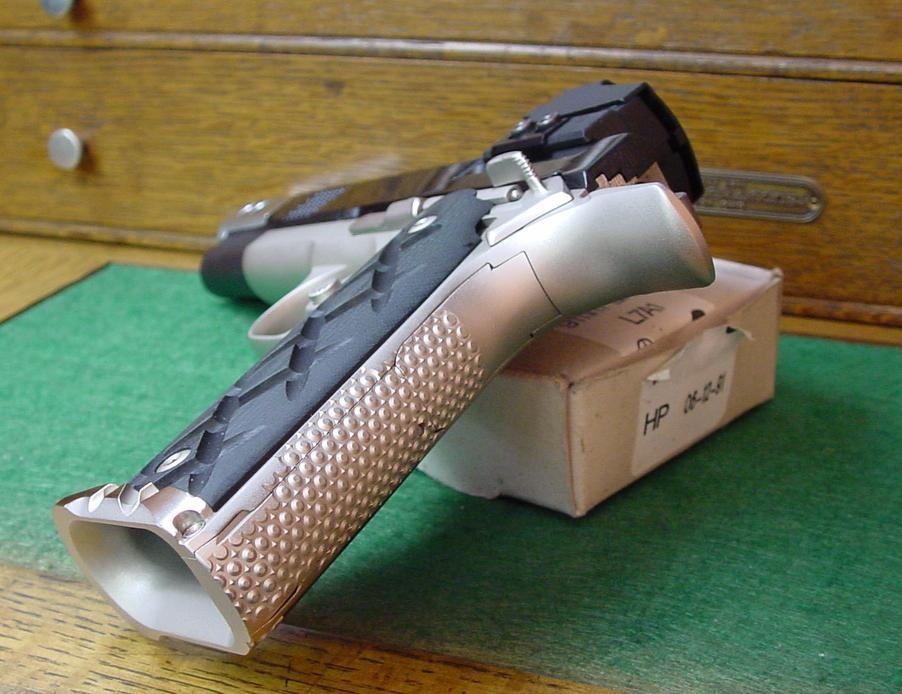
Couple more tech details BTW, the mainspring housing is a Caspian cast aluminum one for their hi-cap frame, so it has a little forward step allowing me to cut into the rear web of the frame's mag chute towards the little slot that retains the sear spring..... in the bottom of this cut then, the step in the MSH comes to rest. This allows one to open the magwell way out in back without getting a knife-edge of steel on the web. I had bought one of these MSH's seeing that it has the step in it that I usually fabricate onto an MSH for this purpose. It does not go as deep as I'd like into the frame, so I never used it and continue to modify existing MSH's, or, when an aluminum one is called for, I make it from scratch. But the theme of this gun was to use as many existing, lay-around parts as possible and to keep it something I could put together keeping the time and money as low as possible.
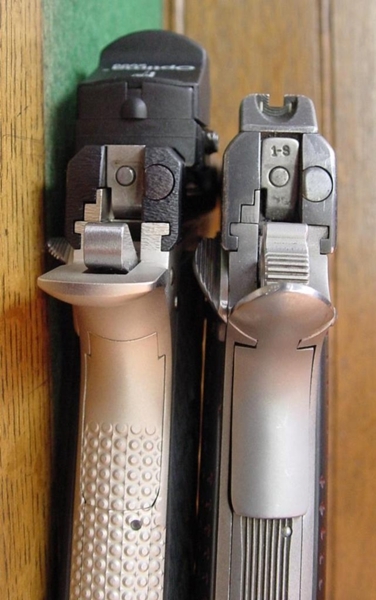
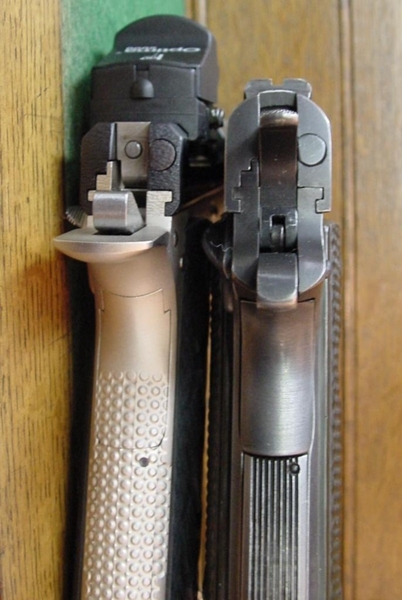
The beavertail is a piece made from scratch and T-slotted into the frame. My original intent was to leave it as a separate part, but I found that even with it in place, I could still wrangle all the guts in and out, so I silvered it in place.
The piece between the beavertail and MSH is just machined out of 7075 aluminum, and heeled in under the beavertail on top, then retained on the bottom by the top of the MSH, the part that usually stops the rearward movment of the grip safety.
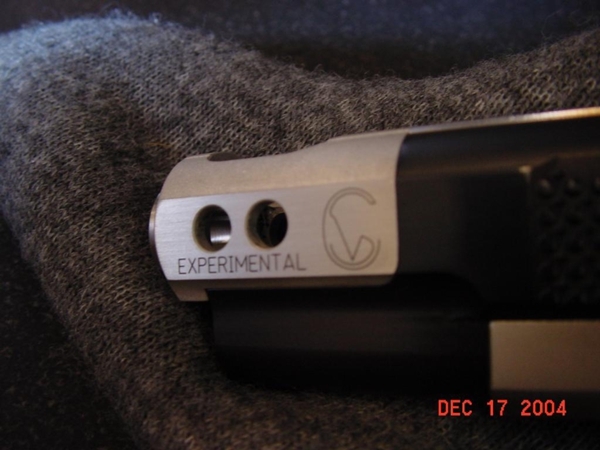
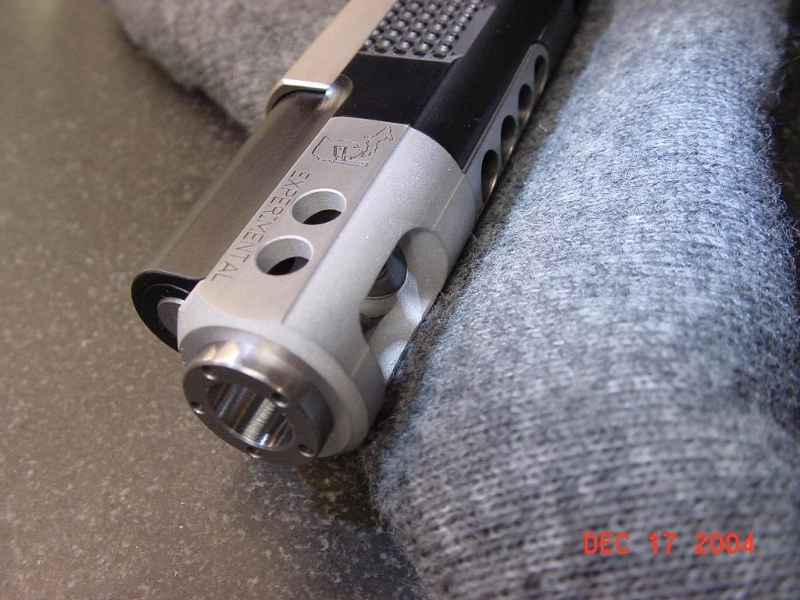
The magwell's made from scratch and silvered on. Richard, no, there's nothing different about the firing pin stop other than having been cut off a little on top. eerw, you asked if it was experimental or would I be offering it? Both, sorta. Actually I am having "experimental" engraved on it just for the hell of it, but, yes, I would do it as a custom mod ( but have not really considered what to charge), and have spoken to some folks about doing frames for me and plan on talking to some more at SHOT, but don't read too much into this.
The comp is machined from 7075 also, and had a slight, ah, booboo in it. The diameter of the expansion chamber sorta collided with the the flat on the bottom, me in my enthusiastic rush having failed to consider this relationship. The result-- a window in the floor of the comp. But no biggie, really-- the recoil spring plug has a flat piece silvered to the top of it to fill the gap between the slide's barrel bore and recoil spring tunnel, so when the gun's in battery, the window is closed by this flat piece. It's pretty much a no-gap fit so it seals it good enough; anyway, after the barrel ports I don't think the comp is getting as pressurized as it otherwise might and is probably contributing very little to the overall recoil and flip reduction. This flat piece gets a little sooted and fouled up where it's exposed to the gasses, but not so bad that it'll interfere with functioning, at least not it 200 rounds or so.
I sent it to Ford's for refinishing. I wanted something that would cover the silver joints well, that meant nickel, and I wanted something that would plate the aluminum parts equally as well as the steel. Horace told me "Watts bath" which I gather is regular old nickel electro-plate, the kind you'd find on a Colt or Smith& Wesson, with copper plate under it as a base. This gun I believe has electoless nickel under the electro plate. Indeed it is impossible to tell the dif between the steel and aluminum parts, and coverage was 100%, I mean even in the holes. A very, very nice looking finish. I had them blue the slide and a few other little parts. Nickel is not as "white" as chrome, which i think some people don't like. I'm not expecially partial to either one, they both have their cosmetic and functional advantages, but the nickel looks a little "warmer" to me.
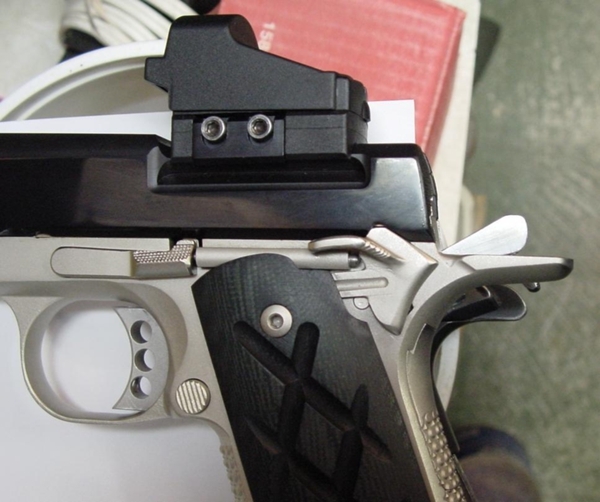
The Optima is mounted to a short length of Weaver rail that is simply machined into the top of the slide. There is a 1/8" pin hidden under there to locate it and keep it from migrating forward.
Patrick, oh for a selector switch on this one, eh?
|
 Register
 Login
Login FAQ
FAQ